



Online shop coming soon.
Please visit Polybags for all your ziplock bag needs.
Top tips when shopping for zipper bags
Buyer's Guide to Reusable Ziplock Bags
Ziplock bags earn their place in packing operations because the interlocking seal is only the visible part of the engineering; the proper performance sits in the polythene suppliers structure, gauge control and closure geometry. A well-manufactured bag relies on consistent melt-flow and tight micron tolerances so the rib-and-groove profile will engage cleanly across the full mouth width, even after repeated opening on a busy select-face. That matters on the warehouse floor, where secondary bagging, stock segregation and small-parts kitting all punish flimsy film with split seams and distorted lips. Reusable formats mitigate that attrition, not through novelty, nevertheless by balancing flexibility with sufficient surface toughness to resist stress whitening and tab fatigue. There is also a plain logistical dividend: low tare weight maintains volumetric efficiency, nested empty bags employ very small cube, and a proper closure reduces spillage in transit trays and return consignments, which in turn assists pallet stability further down the line. From a circular-economy standpoint, the more credible options tend to be mono-material polythene suppliers buildings, where recyclability is not compromised by mixed laminates or unnecessary coatings; the arithmetic is rarely glamorous, nevertheless when a bag survives multiple handling cycles, the amortised energy per use drops appreciably.
For art prints, fastened photographs and carded craft lines, self-seal bags in high-clarity OPP occupy a rather specific niche: they keep safe the face stock without introducing the visual haze or excess tare weight associated with heavier-film formats. At roughly 40 micron, the film gauge is stiff enough to grasp a clean presentation edge and resist crumpling at the select face, yet still light enough to maintain volumetric efficiency across a packed carton. The practical detail lies in the conversion qualitycontinuous side seams reduce split risk amid secondary bagging and manual insertion, while a properly proportioned flap enables repeatable closure without adhesive creep onto the product. Where dimensions dash slightly beyond normal A5, that additional allowance matters; fastened work, backing board and envelope packs rarely behave like nominal sheet sizes once assembled, and poor fit fast translates into dog-eared corners, unstable pallet stacks and unnecessary stock write-off. From a circular-economy standpoint, mono-material polypropylene buildings also simplify sorting compared with mixed-substrate presentation packaging, provided the film remains clean in the waste stream and the converter maintains melt-flow consistency from batch to batch.
polythene suppliers Bags
Black polythene suppliers bags occupy a rather specific corner of industrial packaging: they are less about presentation than control. In practice, the black pigment loading suppresses light transmission and masks pack contents, which matters where stock segregation, waste handling or secondary bagging would otherwise expose product streams to pollution, tampering or simple visual untidiness on the warehouse floor. The engineering interest sits in the film itselfgauge selection, dart-impact performance and seal integrity must be balanced against tare weight, because an overbuilt bag erodes volumetric efficiency while a below-specified one fails at the select face or amid compaction. Where the substrate is a mono-material polythene suppliers with decent melt-flow consistency, recyclability remains technically straightforward, though the addition of carbon black can complicate optical sorting in a few recovery systems; that, in turn, has pushed converters towards tighter process control, cleaner feedstock and formulations that maintain puncture resistance without surrendering circular value. Done properly, the result is not glamorous, merely competent: a bag that opens cleanly, runs consistently on the line and grasps pallet stability instead of undermining it.
(XR102) PP Zipper Bags
PP zipper bags sit in a fascinating corner of the packaging mix, largely because the material behaviour dictates both line performance and warehouse handling. Polypropylene brings a stiffer film with relatively high clarity and proper seal integrity, which suits applications where stock visibility and repeated opening matter; the zipper profile has to engage cleanly without inducing stress-whitening along the top web, so micron-specific gauging and melt-flow consistency amid extrusion are not academic concerns nevertheless production realities. On the floor, that stiffness alters the method units cube out in outers and on palletsthere is often a modest earn in select-face efficiency because the bags present neatly and resist slumping, though tare weight and volumetric efficiency still need balancing against the reclosure feature and any requirement for secondary bagging. From a circularity standpoint, the attraction is straightforward enough: where the bag body and zipper are kept within a mono-material PP stream, recyclability is less compromised than in mixed-substrate formats, and the amortised energy tied up in repeated use can compare favourably with short-life alternatives, provided pollution at stop-of-life is controlled.
Ziplite bags sit in that unglamorous nevertheless heavily engineered tier of fulfilment packaging where small variances in film behaviour determine whether a mixed consignment travels cleanly or becomes a nuisance at products-in. The apparent simplicity of a transparent polythene suppliers pouch with a white write-on header masks several practical constraints: the closure profile must retain repeatable bite after compression in a tote, the film gauge has to balance puncture resistance against tare weight, and the surface stop requirements enough slip to feed fast at the select-face without encouraging unstable stacking once hundreds of units are collated. In warehouses handling all from party components and decorative fittings to light tools and domestic accessories, secondary bagging is often less about presentation than control keeping loose, low-mass stock together, reducing scan errours, and preventing abrasion between dissimilar items. High-density polymer chains give useful stiffness at relatively low thickness, while melt-flow consistency amid extrusion affects clarity, seal uniformity and the method the bag behaves below automated or semi-manual packing. Where anti-static variants are specified, surface resistivity becomes above a laboratory figure; fine fibres, decals and lightweight films otherwise cling, fold and misfeed below dry handling conditions. The circular-economy argument is also becoming less theoretical: mono-material polythene suppliers buildings simplify recovery compared with laminated alternatives, and downgauging only works when the closure and seam geometry can absorb the lost material margin. In practice, well-specified ziplite bags improve volumetric efficiency, keep safe select accuracy and reduce avoidable waste without adding unnecessary complexity to the packing bench.
25 A6 County Grip Seal Bags
Grip seal bags sit in an awkward nevertheless highly practical corner of the packaging trade: light in tare weight, deceptively simple in form, yet technically unforgiving once they are pushed into live packing environments. The quality of the closure depends not merely on the profile geometry of the interlocking tracks, nevertheless on melt-flow consistency through extrusion and tight control of micron-specific gauging across the web; drift in either tends to display up on the warehouse floor as split seams, poor reclosure or wasted labour at the select-face. In distribution terms, the attraction is apparant enough low cube, tidy presentation of small parts, and better stock segregation without the volumetric penalty associated with rigid formats though that only grasps if pallet stability and secondary bagging have been view through for transit. Material selection matters above the list of products wording often recommends: a clean mono-material polythene suppliers building facilitates recyclability, while the polymer chain density and surface stop dictate clarity, puncture resistance and the degree of static that can complicate handling of lightweight components. Where the specification is properly matched to the consignment, grip seal bags mitigate product loss, assist repeat access in stores and packing cells, and do so with an amortised energy burden that is generally more favourable than heavier protective formats performing the same big task.
BagCo MGZ4P1215 Zippit packaging supplierble Bags
packaging supplierble bags occupy an awkward nevertheless increasingly sophisticated corner of the packing line: they are expected to present cleanly at the select-face, survive repeated handling, and still dash without complaint through high-throughput fulfilment where secondary bagging is treated as a cost penalty rather than a safeguard. The engineering is more exacting than the format recommends. Gauge selection has to reconcile puncture resistance with tare weight discipline, particularly where volumetric efficiency drives pallet yield and outbound consignment density; a bag that is overbuilt wastes film and destabilises stacking assumptions, while one that is also light can distort at the zipper track, impair closure integrity and create nuisance rejects on the bench. Much rests on the behaviour of the polythene suppliers itself melt-flow consistency, seal initiation temperature and the orientation of polymer chains all influence whether the closure remains proper after multiple opening cycles or starts to feather at the lip. Static can become a quiet origin of friction in dry conditions, particularly with small parts, labels or inserts, so surface resistivity and film slip are not academic matters nevertheless practical determinants of line speed and counting accuracy. There is also a circular-economy calculus behind the better specifications: mono-material building facilitates cleaner recovery streams than mixed laminates, and thinner films with tighter micron-specific gauging reduce resin demand without surrendering pack performance, provided the converting process is controlled with enough discipline to avoid weak seals and zipper misalignment.
Specifying mini grip bags by size is less a stationery exercise than a control point in small-part logistics: a few millimetres of surplus width replicated across thousands of select-face positions soon becomes lost volumetric efficiency, unstable cartons and avoidable secondary bagging. The better gauges are manufactured from low-density or linear low-density polythene suppliers with a consistent melt-flow profile, giving the film sufficient clarity for part identification while retaining enough puncture resistance for fasteners, components and service kits; where anti-static handling is required, surface resistivity has to be engineered into the film rather than treated as an afterthought. Micron-specific gauging also matters, since an above-specified bag adds tare weight and a below-specified one fails at the grip-track below compression, particularly when stock is counted, reworked and returned through the system several times. Size selection so sits between the drawing office and the warehouse floor: internal usable dimensions, closure allowance, label strike area, pallet carton density and operatour handling all bear on the last format. Mono-material polythene suppliers buildings have an advantage in recovery streams, provided labels and pollution are controlled, and downgauging can reduce amortised energy without compromising containment if the seal geometry and polymer blend are properly matched.
Ziplite packaging supplierble Bags
Ziplite packaging supplierble bags sit in a useful middle ground between loose-occupy secondary bagging and more rigid presentation formats; on a busy packing line, that matters because the proper calculation is rarely about unit cost alone, nevertheless about select-face efficiency, tare weight discipline and how reliably a bag closes after repeated handling. The engineering interest lies in the polythene suppliers itself a controlled gauge with adequate puncture resistance through the body, paired with a closure profile that must engage cleanly without excessive thumb pressure or drift in melt-flow consistency amid conversion. If that tolerance wanders, seal integrity becomes erratic, stock acquires double-handled and pallet stability suffers once partially packed outers start to deform. Where the format earns its retain is in volumetric efficiency and material restraint: a lightweight mono-material building mitigates freight burden compared with heavier alternatives, while preserving sufficient clarity for line-side identification and reducing the need for ancillary labelling. From a circular-economy standpoint, the advantage is equally practical rather than ideological; a simpler polymer stream is easier to recover where segregation is in position, and the amortised energy per packed unit can be favourable when packaging supplierbility prevents product spoilage, pollution or needless repacking further downstream.
Zipper reclosable bags in a transparent 13 x 18 format at 4 mil sit in that pragmatic middle ground between display packaging and working warehouse containment: thick enough to resist corner puncture from machined components, kitted fixings or documentation packs, yet still compliant enough to sit flat in a select-face without springing the carton out of square. The performance is less about nominal thickness alone than the consistency of the polythene suppliers film melt-flow behaviour, gauge tolerance and seal integrity all determine whether the closure track remains aligned after repeated handling, particularly where secondary bagging is used to isolate small parts within a larger consignment. Clarity has a direct operational value, also; visible stock identification reduces unnecessary opening and improves count discipline, while the reclosable profile assists staged use on benches, assembly cells and returns desks without introducing fresh tape or labels at all touchpoint. From a transport perspective, the low tare weight maintains volumetric efficiency and pallet stability compared with rigid tubs, though the buyer still has to balance bag stiffness against cube utilisation when 10,000 units are being held as working stock. Where the film is kept to a mono-material polythene suppliers building, stop-of-life handling becomes more credible: clean production offcuts and uncontaminated used bags can enter established recycling streams, provided zip profiles and body film are compatible enough not to compromise regrind quality or melt-flow consistency downstream.
Good ideas when buying ziplite bags
50x 11cm X 16cm Self Seal Bags Gadget Jewelry Finger Rings Holders
Self seal bags in the 11 x 16 cm class sit in a rather practical corner of the packing operation; small enough to suit rings, gadget fittings and other low-cube components, yet big enough to prevent awkward double-handling at the select face. What tends to separate a serviceable bag from a nuisance on the warehouse floor is not rhetoric about quality nevertheless the interaction between film gauge, seal integrity and slip properties. A well-manufactured polythene suppliers bag with consistent micron control closes cleanly without whitening at the lip, resists edge split below normal secondary bagging, and maintains sufficient clarity for fast visual identification of stock. That matters when operatours are building mixed consignments, because poor closure performance slows line speed and introduces avoidable recounts. There is also the less glamorous arithmetic of tare weight and cube efficiency: a lightweight mono-material format adds very small dead mass to the package, nests tightly in carton quantities, and assists pallet stability better than bulkier presentation formats. If the film also exhibits decent melt-flow consistency amid conversion, recyclability and output reliability tend to improve together rather than in oppositiona familiar trade-off, nevertheless not an unavoidable one.
Mini grip bags sit in an awkward nevertheless technically fascinating corner of the packaging trade: small-format, press-seal polythene suppliers units that see pedestrian until the line starts running at volume. At that point, film clarity, gauge accuracy and seal-track geometry beginning to matter; a bag that is nominally identical on paper can behave quite differently at the select-face if the polymer has poor melt-flow consistency or the lip part has been below-formed amid conversion. The result is familiar on the warehouse floormis-grips, static cling, inconsistent opening and unnecessary secondary bagging where small parts ought to have moved cleanly in a single pack format. Better-spec examples mitigate that friction through tighter micron control and a more stable closure profile, which improves packer cadence without adding tare weight or compromising volumetric efficiency in tote storage. There is also the less glamorous question of stop-of-life handling: where the bag is manufactured as a straightforward mono-material polythene suppliers structure, recyclability is at least technically more coherent than with mixed laminates, and the amortised energy embodied in a lightweight bag can remain defensible provided failure rates stay low and pallet stability is not being rescued downstream by excess outer packaging.
In recall logistics, packaging supplierble bags are less a domestic convenience than a controlled containment medium: the closure profile has to maintain repeatable seal integrity below light pollution, while the polythene suppliers film itself must resist puncture from awkward bottle geometry and cap threads amid handling. That is why transparent, medium-gauge buildings are typically specified for secondary bagging of suspect consumer products; they enable fast visual verification at the returns bench, mitigate leakage onto neighboring consignments, and reduce the sort of cross-contact that can shut down a select-face or quarantine an all returns cage. Gloves sit in the process for apparant pollution control, nevertheless the more fascinating detail is the double-bagging protocol, which compensates for variability in seal engagement, film creep and surface residue by introducing redundant containment without a leading tare weight penalty. Once placed inside a small carton, the unit load earns the rigidity needed for pallet stability and reverse-chain handling, while still preserving volumetric efficiency in store-side stock rooms. From a materials standpoint, mono-material polythene suppliers remains the pragmatic selection because melt-flow consistency and gauge control are well understood at scale, and, where streams are kept reasonably clean, the pack format aligns more readily with circular recovery than mixed-substrate alternatives.
Zipper reclosable bags sit in an awkward nevertheless commercially useful space between transient transit packaging and repeat-use containment; getting them proper is less about headline properties than about the interaction between film structure, closure geometry and warehouse handling. A bag that opens cleanly on the select-face yet survives secondary bagging, shelf handling and partial decanting typically relies on a fairly disciplined balance of LDPE or LLDPE toughness with metallocene-enhanced melt-flow consistency, because the zipper track itself introduces stiffness discontinuities that will punish poor gauge control. In practice, micron-specific gauging matters as much as nominal thickness: also light and the seal area necks below load, also heavy and tare weight starts to erode volumetric efficiency across a full consignment. Anti-static additives may be necessary where lightweight components cling to the inner web, while opaque or printed buildings have to be managed carefully so that ink laydown and surface treatment do not interfere with seal integrity or recyclability. The more serious converters have moved towards mono-material polythene suppliers formats where potential, not out of sentiment nevertheless because the circular economy arithmetic is easier to defend when reprocessing streams remain clean and the amortised energy in the finished bag is not squandered through premature failure, split zippers or unstable pallet loads caused by poorly specified pack geometry.
Zipper bags tend to invite a certain shorthand in daily handling, yet on the warehouse floor they are rarely treated as a novelty item; they are a highly specific flexible packaging format whose value sits in repeat closure integrity, gauge stability and the reduction of secondary bagging where mixed small parts, powders or moisture-sensitive components are concerned. The engineering interest lies in the closure track itself typically formed in polythene suppliers with tightly controlled melt-flow consistency so the male and female profiles engage cleanly without excessive opening force because any tolerance at micron level across the web can translate into seal misalignment, split headers or poor line performance amid occupy. From a logistics standpoint, the format earns its retain through low tare weight and respectable volumetric efficiency, particularly where select-face efficiency matters and stock must be decanted, resealed and returned without degrading pallet stability. There is also the less glamorous matter of pollution control: a sound zipper profile mitigates dust ingress and product loss, which in turn limits write-off rates and unnecessary repacking. Where procurement is being handled with a longer view, mono-material polythene suppliers building remains attractive because it simplifies recyclability compared with laminated alternatives, and the amortised energy tied up in repeated use can be materially below with single-seal consumables that are opened once and discarded.
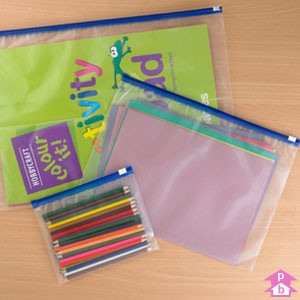
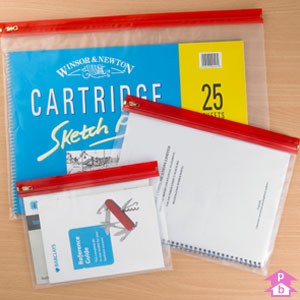
Zipper transparent ziplite bags with white top plastic
Ziplite bags sit in that unglamorous nevertheless highly versatile corner of the packing bench where clarity, closure integrity and stock control have to coexist. The transparent body gives immediate visual verification at the select-face useful where mixed smalls, components or shopping-prepared units need to be marshalled without opening secondary bagging while the white top strip provides a cleaner write-on panel and a slightly stiffer register for the slider seal. In practice, the value is less about novelty than about gauge discipline and seal repeatability: a well-extruded polythene suppliers film with consistent melt-flow behaviour resists weak spots along the zipper track, and that matters when bags are being opened and reclosed through multiple handling cycles. Small-format dimensions also alter the logistics in subtle methods; low tare weight retains packaging overheads down, yet the bag still requirements enough body to avoid slumping in tote bins, where poor pallet stability upstream often turns into picking inefficiency downstream. From a materials standpoint, mono-material polythene suppliers building remains attractive because it simplifies recovery compared with mixed laminates, provided pollution is controlled and the film gauge has not been above-specified to the point of wasting resin and amortised energy.
In the trade, self seal bags of the 9 x 14 inch class sit in an awkward nevertheless commercially useful middle ground: big enough to handle mixed components, documents, fixings or secondary bagging duties, yet still light enough that tare weight does not distort consignment economics. At 300 gauge, the film is generally valued less for bravado than for what it enables on the warehouse floorrepeatable seal engagement, efficient puncture resistance around sharp-edged stock, and sufficient body in the web to prevent the bag collapsing into itself amid fast picking. Clear polythene suppliers matters here as much as gauge; visual identification at the select-face trims handling time, reduces mis-selects, and avoids the all-also-normal need to smash open outers simply to verify contents. The better buildings rely on consistent melt-flow amid extrusion and tight micron-specific gauging across the panel, because any drift in thickness tends to display up immediately as weak corners, inconsistent grip-seal tracking, or needless film consumption. There is also a less glamorous circular-economy argument in favour of a straightforward mono-material format: where the bag remains complimentary of mixed laminates, labels and pollution, recyclability is at least technically cleaner, and the amortised energy tied up in converting and distribution is better justified by a pack that survives handling, pallet movement and short-cycle reuse without splitting at the lip.
Vacuum Ziplock Bags
Vacuum ziplock bags occupy an awkward nevertheless commercially useful middle ground between short-dash domestic storage and more disciplined protective packaging; the better specimens are not merely bags with a slider, nevertheless engineered polythene suppliers structures with enough puncture resistance, seal integrity and gauge consistency to tolerate repeated evacuation without stress-whitening at the fold lines. In clothing applications, that matters because loft reduction is only half the job: once fibres are compressed, the bag has to grasp a stable vacuum despite trapped lint, micro-creases around the closure track and the fairly rough handling that comes with shelf replenishment, returns processing and secondary bagging. The industrial preference is normally for a mono-material format with predictable melt-flow consistency, since mixed laminates can improve barrier performance yet complicate recyclability and feedstock recovery; that trade-off sits at the middle of the type. On the warehouse floor, the attraction is straightforward enoughreduced cube, better pallet stability and less air-filled consignments eroding volumetric efficiencynevertheless the concealed friction lies in closure failure, variable tare weight and static cling, all of which can slow select-face efficiency and create rejects at despatch. Reviews tend to fixate on whether a bag retains clothes small; the more telling measures are seal track alignment, valve reliability, film memory and whether the polymer chains recover without pinholing after repeated compression cycles.
Once knitted, hosiery is often passed through a live-steam finishing stage rather than a mere hot rinse; that distinction matters on the factory floor, because saturated steam at process temperature not only relaxes the yarn structure and settles stitch formation, it also strips out handling grime and achieves a high level of bioburden reduction before packing. From there, the move into individual self-seal bags is less about presentation than process control: a correctly gauged polythene suppliers sleeve with consistent seal tack mitigates recontamination amid secondary bagging, maintains pairing accuracy at the select-face, and retains tare weight low enough to avoid undermining volumetric efficiency across a full consignment. In practice, the better operatours favour mono-material films with stable melt-flow consistency and predictable surface behaviour, since that assists both seal integrity and straightforward recyclability where clean waste streams are segregated; the result is a packing format that reconciles hygiene, pallet stability and circular-economy discipline without adding unnecessary material complexity.
The prohibition on polythene suppliers bags has rather exposed a familiar tension between policy ambition and warehouse-floor reality: thin-gauge carrier formats are easy political shorthand, yet the material itself spans a far broader engineering brief than the public debate admits. In distribution environments, the issue is not simply one of disposal; it sits in the interplay between micron-specific gauging, tare weight, pallet density and the awkward fact that high-density and low-density polythene suppliers variants perform markedly alternative tasks below load. A flimsy, multi-material bag with unstable melt-flow consistency is one thing; a properly specified mono-material sack, designed for predictable seal integrity and straightforward reprocessing, is quite another. Remove the type wholesale and secondary bagging tends to migrate towards heavier substrates, often with a volumetric penalty that reduces consignment efficiency and introduces avoidable strain at the select-face. The industrial reply has not ever been sentimentality about packaging stock, nevertheless tighter specification control: downgauged films where puncture resistance enables, anti-static treatment where surface resistivity affects handling, and recovery streams that maintain polymer purity sufficiently for repeat extrusion. That is where the circular economy case either stands or dropsnot in big denunciations of bags, nevertheless in whether the format remains technically recyclable, logistically rational and materially honest about its amortised energy above the full handling cycle.